Author Archives: Gary Shogren

Gary Shogren's avatar

About Gary Shogren

I am a professor of New Testament from the USA, working as a professor at ESEPA Bible College and Seminary in San José, Costa Rica. Soy profesor de Nuevo Testamento, Seminario ESEPA, San José, Costa Rica (http://esepa.org)

Why is this girl smiling?

A few days ago we announced that we were looking for a car. Thank the Lord, a missionary was selling his Sentra and our mechanic told us it was a great deal. We bought it on Wednesday.
Thursday, Karen used it for the first time in her ministry: she didn’t have to take 6 buses and travel for 3 hours to lead one of her Bible studies. Instead, she drove about 20 minutes each way!

In the blog below, Special Appeal (click HERE), you can read how you can contribute to its purchase. We went ahead and bought it in faith, and so far about $700 of the $6000 dollars has come in from our friends.

Many blessings! Gary Shogren

Leave a comment

Filed under Costa Rica, ESEPA, Gary Shogren, Karen Shogren, Missions, WorldVenture

What does Spanish matter?

A cabinetmaker needs a professional router.
A programmer needs plenty of RAM.
A chef needs a serious mixer.
A missionary teacher needs a second language. For the missionary, language is the principal tool for doing ministry.

What are we trying to communicate when we use Spanish?

  • that we are here for the long term.
  • that we were serious about working in their culture.
  • that we want to speak about God in their “lengua del corazón” (language of the heart).

In Costa Rica, the central social event is to sit and enjoy a “cafecito” (a bit of coffee) with friends. Continue reading

2 Comments

Filed under Bible, Costa Rica, ESEPA, Gary Shogren, Karen Shogren, Missions, WorldVenture

The Parable of the Little Toe

Once upon a time there was a church, a body of Christ.

On the platform stood various members. One man led the worship and read a Psalm aloud. A woman was the main singer; she too held a microphone. Two other women and a man were backup singers. There was a guitarist who played the chords; a drummer who provided the rhythm; a man with a trumpet, another with a bass guitar. Each member of one body, each one with his or her special contribution.

But what is this? What’s the hold-up? The worship leader asks that the church sing louder, with more joy and enthusiasm, but the people don’t follow his lead. Are they, as he suggests none too subtly, unspiritual? Well, it’s not their fault: they’d like to sing with more energy, but something is holding them back. They don’t know the words of this song, and the screen is blank!

Because up in a little control-room in back of the church, there’s a member of the body who handles the technology: the projector and the PowerPoint in order to show the lyrics. But he seems to be dreaming and his attention is wandering. He answers his phone, he chats with his girlfriend, he sends a text, he updates his Facebook.

The people want to sing with all their might, but without this one member, the hymn doesn’t fly.

“Just look,” he complains, instead of doing his job. “I can’t sing like her, I can’t play an instrument like they do. No wonder I skip rehearsal, since my part in the ‘show’ hardly matters. I’m not important, my part in this is tiny. In the body of the Lord, I’m just a little toe!”

Now you see the point of my little story: Everybody has their gift, whether they’re an elbow, a hand or an ear. And if one member doesn’t work, the body doesn’t function; when one little toe is missing in action, the whole body ceases to worship.

All these are activated by one and the same Spirit, who allots to each one individually just as the Spirit chooses. For just as the body is one and has many members, and all the members of the body, though many, are one body, so it is with Christ.If the foot would say, “Because I am not a hand, I do not belong to the body,” that would not make it any less a part of the body. And if the ear would say, “Because I am not an eye, I do not belong to the body,” that would not make it any less a part of the body. If the whole body were an eye, where would the hearing be? If the whole body were hearing, where would the sense of smell be? But as it is, God arranged the members in the body, each one of them, as he chose. If all were a single member, where would the body be…On the contrary, the members of the body that seem to be weaker are indispensable. 1 Cor 12:11-12, 15-19, 22

“The Parable of the Little Toe” was  originally written in Spanish for a Latin American context and is here presented in English. By Gary Shogren, Seminario ESEPA, San José, Costa Rica. For more essays, visit Gary’s blog at justinofnablus.com

Leave a comment

Filed under Bible, Costa Rica, ESEPA, Gary Shogren, Karen Shogren, Missions, New Testament, WorldVenture

“The just shall live BY FATE?”

[for this and other essays, visit Gary’s blog, justinofnablus.com] I occasionally visit an English-language church in San José, attended by African-Caribbean believers. For me, their English is harder to understand than most Spanish.

A few months ago, a lady behind me was leading us in prayer, and for a heart-stopping 15 seconds I thought she said that we Christians “live according to Fate.” What in the world…? Then I realized that with her accent the “th” sound comes out as “t” – ah, that’s better, she said that we live according to faith. Phew. One the truth, the other not, and just one letter separating them. Continue reading

Leave a comment

Filed under Bible, Costa Rica, ESEPA, Gary Shogren, Karen Shogren, Missions, New Testament, WorldVenture

Gary’s year, 2011

My ministry is teaching, and that’s how I invest most of my time. My courses require a lot of preparation, so even if I only teach eight hours a week, it’s a full-time job. Most of my students are pastors or in other ministry, and it’s exciting to see them take what we learn in the classroom and immediately apply it to their work. I’m teaching first-year Greek in Spanish for the first time, and so for four hours every Tuesday night I juggle three languages in my head as we learn about participles or nouns. Continue reading

Leave a comment

Filed under Bible, Costa Rica, ESEPA, Gary Shogren, Karen Shogren, Missions, seminario, WorldVenture

Study by Gary – “Dear Paul: We are sorry, but you are unqualified to be our apostle…”

Paul had a precise idea of how to serve God. He worked day and night with his own hands; he risked his life and his health; he “served” the churches and did not exploit them. As a teacher he acted with patience and consideration: when people wanted answers he gave them careful, detailed explanations. He communicated the gospel in a way that anyone could understand (1 Cor 9:20-22).

From what we can glean in 1 and 2 Corinthians, that church wanted a different breed of apostle:

Church at Corinth, Achaia

Wanted: an apostle with style

The church in Corinth is seeking applicants for the position of apostle. We wish to avoid leaders who do not measure up to the highest standards of Christian ministry. Hence we insist that all candidates fulfill the following conditions:

Professional demeanor

  • We want a man who holds his head high, not one with a slavish attitude of “service.” We want to show the appeal of the gospel for people with ambition.
  • He should own a vehicle; travel by foot gives the impression that one is a loser.

For the rest of the story, go to http://justinofnablus.com/2011/11/01/dear-paul-we-are-sorry-but-you-are-unqualified-to-be-our-apostle%e2%80%a6-studies-in-1-corinthians/

1 Comment

Filed under Uncategorized

Karen and her friends

I love it when people ask me what I do as a missionary in Costa Rica! As an unabashed story-teller, I have accrued hundreds of tales of interesting things I have done in the last 13 years, and will happily keep any audience laughing and crying over the joys and heartbreaks of my ministry. The hard part is when I have to come up with the Reader’s Digest version, in order to explain: What precisely DO I do?

In very general terms, I become involved in the lives of the people around me in whichever way I can serve as God’s hands and feet in this imperfect world. I am learning that the emphasis must be on the people around me, not on the tasks. For example, there’s Marta. She ministers in the local women’s prison. She was so energized by my Inductive Bible Study course that she wanted others to hear. And so she called on Wednesday to ask if I would be willing to show her co-workers how to study the Bible properly. And would I be able to start on Saturday morning?

Where I grew up, we learned to focus on our tasks. Continue reading

Leave a comment

Filed under Costa Rica, ESEPA, Gary Shogren, Karen Shogren, Missions, WorldVenture

FREE Book by Gary Shogren

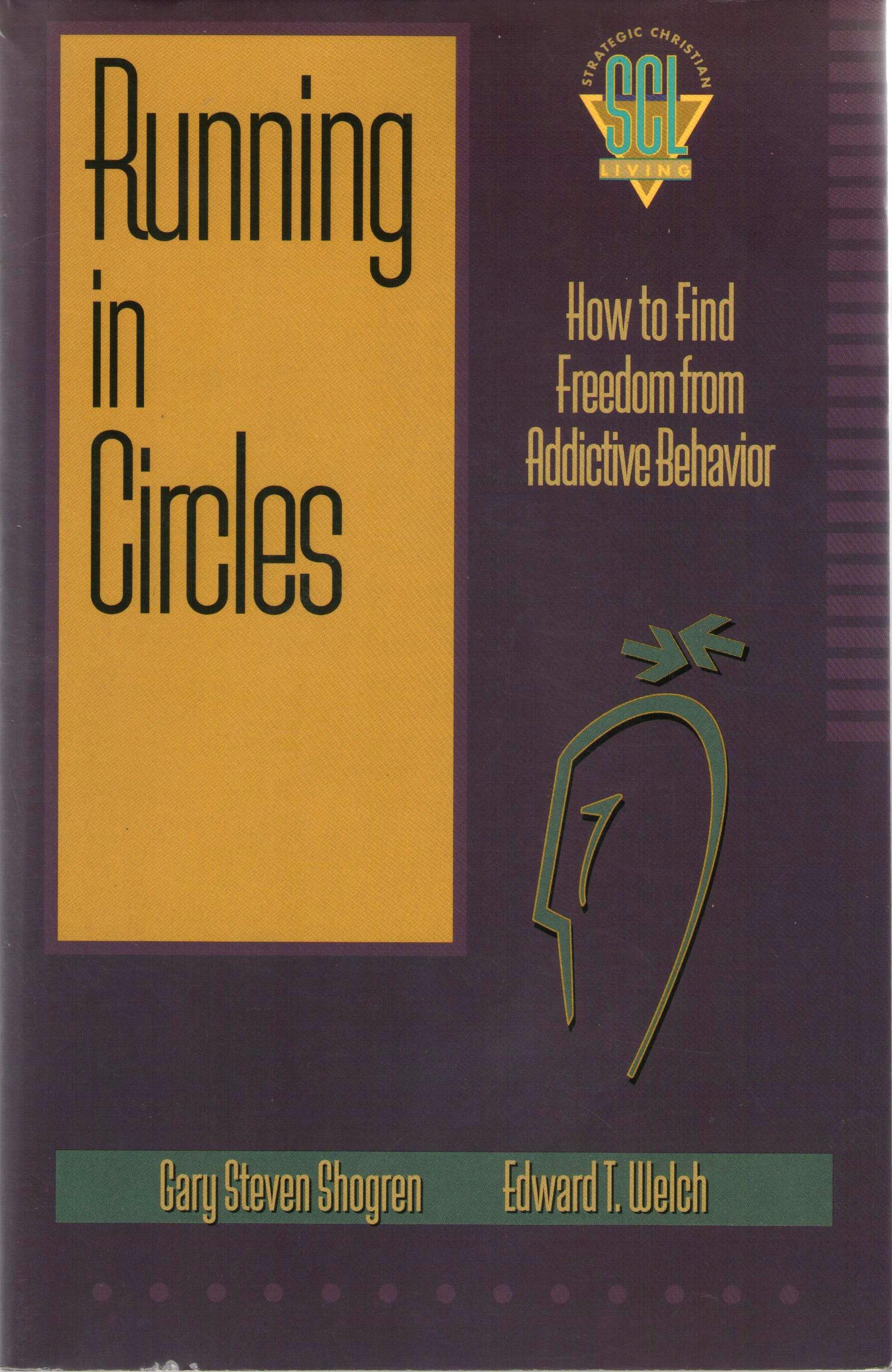
In 1995 I published “Running in Circles: how to find freedom from addictive behavior” with Baker Book House. It is written with the addict in mind, using straightforward language for the person who isn’t necessarily a Christian or even religious. Now you can download a full copy for yourself or for a friend. Click to view Shogren_Running_in_Circles

1 Comment

Filed under Uncategorized

We follow Gary around for a day…

What’s it like to teach at ESEPA, in San José, Costa Rica? Let’s drop in on a Tuesday. It’s my busiest day, since I have one class in the morning, then another in the evening. There are “office hours” in between, where I work with the staff or talk with students.

All teaching and meetings are in Spanish, so I have to push myself physically and mentally. I leave home at 7am. Part of my routine is a morning walk, so the 40 minutes between home and ESEPA accomplishes several things: my exercise for Tuesday; getting the heart and lungs and brain moving; and it’s my time to pray. I pray for all the things that Christians pray for, and especially for my morning class. Today I’ll teach the Epistle to the Hebrews for three hours. See here for a quick video: http://www.youtube.com/watch?v=0nLSvFtfVKc&feature=youtube_gdata

I get a coffee and enter the classroom with cheerful greetings and then with an “¡Ay no!” as I break out the quiz. Hebrews is a new course for me. We use F. F. Bruce’s sturdy commentary as our text. This coming week we will study chapter 3, where the author uses Psalm 95 to warn against apostasy. We’ll work as one group. Then they will break into small groups to discuss some aspects of sin in the Old Covenant and how it applies to Christians. In this class they also have to do a Field Project: one man, for example, will visit the local synagogue to interview the rabbi about Jewish worship in the 21st century.

In the middle of Hebrews we gather together for 15 minutes, for a short Bible study and prayer led by a professor or one of the students. The students pray for issues that all of us face, but in this country that might include violent crime, poverty and serious family problems.

Then we go for our coffee break in ESEPA’s “soda”, which is the word for a lunch counter. The manager Dámaris whips up plenty of coffee, plus gallo pinto (rice and beans) and fried eggs, tortillas and cheese and meat turnovers.

Ah, have I mentioned coffee? Costa Rican beans are world-class, and they brew it up strong! It’s not as powerful as Turkish or Cuban coffee, but it comes out quite black. It’s the other thing besides exercise that keeps my blood moving during a long day. Two cups to get me going during Hebrews, another couple before my late class and then another one half-way through the evening.

After the break, it’s another hour or so of Hebrews.

Throughout the day, the principal enemy is fatigue. I don’t want my students to have a drowsy professor. We had a history teacher in high school; if his former students remember anything about him, it was his unfortunate nickname “Sleepy Pete”. For a person working in another language, there is a much worse problem: with fatigue it is more and more doubtful that I’ll be able to speak in proper Spanish. I prayed in the morning specifically about this, and pray during the day too. Usually if I’ve gotten to bed properly the night before, aided with lots of coffee and physical motion and prayer, three hours in the morning and I come out still speaking español.

Teaching in a second language is like running in knee-deep mud.

It’s Round Two where I’ll face the bigger challenger: my evening class. I eat a light lunch and delay supper until I get home; I can’t afford to fill up and get dopey. In the afternoon I might take another walk to try to perk up, or if it’s possible, squeeze in a nap somewhere.

When you teach at ESEPA in the afternoon or evening during rainy season, you have to be ready for an electrical storm and a power outage. Sure, PowerPoint is great, but you might end up teaching by flashlight, so always have a Plan B! On top of that, earthquakes happen every day, usually tremors you can’t feel, but every so often there is one that will get a shriek from the ladies in class.

Gary near the Soda at ESEPA

Tuesday evenings we up the ante, going from bilingual to trilingual. Direct your attention to the center ring, where Gary, an English-speaker, will teach Greek, in Spanish, without a net. I’ve been assigned to Greek I for the first time and have a record ten students in my group. The difficulty here is not just the Spanish. It’s that, to leap from Spanish to Greek one takes a different mental route than when one goes from English to Greek. I have to keep a short list of words that might trip me up: desinencia was one last week, a word I knew (it means “word ending”); but the first time out I mispronounced it. It came out sounding like the Spanish for “dysentery.”

Anyway, it’s closing in on 5pm and time to get ready. Again, much coffee, much splashing of cold water in the face and I enter the class with a cheery “kalespera!” (Greek for “good evening!”). They take their quiz. They ask Don Gary (yes, just like in that movie) or “Profe” (PROH-fay) questions about the homework. Then it’s on to: Tonight we study the genitive and dative cases of the Greek substantive. Two hours, then it’s time for devotions, given by one of the students. Over to Dámaris’ once again for coffee (for me) and food (for them), and back for another hour or so.

Fours hours of Greek: my students have had a long day at work and a commute, and it’s beginning to show. Every once in a while I’ll tell a joke or show them something so they can Amuse and amaze your amigos! I don’t just ask if they understand today’s lesson; I also ask, “How are you feeling? Are we holding it together here?” During the week I’ll also send them an email to encourage them.

We wind up at 9pm. One of the students happens to be going in my direction, so he drops me off at home; it would be dangerous for me to walk to the bus stop this late in the evening. At this point it’s hard to speak English. And, what’s this wonderful thing? Karen has left out a nice supper for me: homemade buffalo chicken sandwiches.

“Gracias, Señor Jesús. This is what I’ve always wanted to do, and by your grace, here I am doing it.” Now let’s eat something, finally, and watch the news before dropping into bed.

2 Comments

Filed under Bible, Costa Rica, ESEPA, Gary Shogren, Karen Shogren, Missions, New Testament, seminario, WorldVenture

Gary’s first missions trip: Romania, post Ceauşescu

For years I had dreamed of going on a short-term mission, but I held back. I wanted to go where I could do something substantial, and not just have my picture taken in a faraway place. Finally the chance came in 1994. How would I like to visit Romania and teach a crash course on New Testament Greek? Through a translator? I accepted immediately. Continue reading

Leave a comment

Filed under Uncategorized